
System selection
HUVEC co-culture or study-specific endothelial source
Build on HUVEC–astrocyte co-culture and ZO-1 junction imaging, with permeability, candidate-response and transport assays configured for the program.
Human umbilical vein endothelial cell (HUVEC)–astrocyte co-culture
HUVEC–astrocyte co-culture
TRiCBIO tight-junction imaging and co-culture assay data
Model characterization
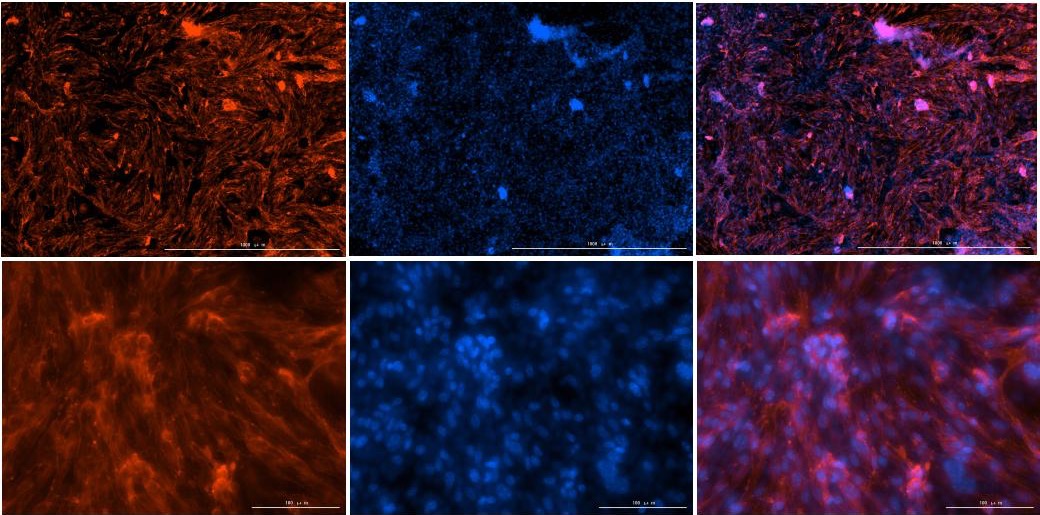
ZO-1 and DAPI imaging shows junction structure in HUVEC–astrocyte co-culture. Candidate-permeability and brain-microvascular studies can add the appropriate endothelial source, barrier-identity, functional and reproducibility assays.
 View image
Immunofluorescence for ZO-1 and DAPI shows junctional organization in the endothelial–astrocyte co-culture and can be paired with permeability, reproducibility and brain-microvascular functional assays.
Study dataStudy design
Select the cell system for the target barrier and study question, establish junction structure, then add candidate treatment and permeability, barrier-integrity or transport readouts.
HUVEC co-culture or study-specific endothelial source
Cell identity, ZO-1 and junction continuity
Transport, retention, injury or recovery conditions
Permeability, TEER and study-specific endpoints
Model documentation
For each project, barrier-cell identity and tight-junction markers such as ZO-1 are selected for the chosen co-culture system.
Projects can extend junction profiling with permeability, barrier-integrity, candidate-response and transport readouts.
HUVEC–astrocyte co-culture supports junction and permeability method development. Human brain microvascular barrier studies add the appropriate endothelial source plus identity and functional validation.
System description, junction images, study-specific assay plan and recommendations for the next study.
Study planning
Barrier context, candidate format and the priority transport, retention, injury or recovery endpoint shape the co-culture conditions, controls and readouts.
Target interface and priority endpoint: candidate transport, retention, barrier injury or recovery.
Endothelial and support-cell sources, available model information, candidate conditions and controls.
Junction structure, permeability, molecular or functional readouts, together with data and reporting needs.
Research applications
Assays & QC
Cell attachment and ZO-1 continuity provide structural QC for the HUVEC–astrocyte co-culture. Each study defines its permeability method, reproducibility targets and acceptance criteria.
Study & delivery
The study can deliver data, method records and recommendations for further system development.
The HUVEC–astrocyte system supports tight-junction imaging and permeability method development. Studies focused on the brain microvascular barrier can add the relevant endothelial source, identity panel and functional criteria.
Related solutions
PROJECT DISCUSSION
Share the target barrier, candidate format and priority transport or injury endpoints. We’ll recommend co-culture conditions, controls and readouts for a blood–brain barrier study.
Build on HUVEC–astrocyte co-culture and ZO-1 junction imaging, with permeability, candidate-response and transport assays configured for the program.
Human umbilical vein endothelial cell (HUVEC)–astrocyte co-culture
HUVEC–astrocyte co-culture
TRiCBIO tight-junction imaging and co-culture assay data
Model characterization
ZO-1 and DAPI imaging shows junction structure in HUVEC–astrocyte co-culture. Candidate-permeability and brain-microvascular studies can add the appropriate endothelial source, barrier-identity, functional and reproducibility assays.
View imageImmunofluorescence for ZO-1 and DAPI shows junctional organization in the endothelial–astrocyte co-culture and can be paired with permeability, reproducibility and brain-microvascular functional assays.
Study dataStudy design
Select the cell system for the target barrier and study question, establish junction structure, then add candidate treatment and permeability, barrier-integrity or transport readouts.
HUVEC co-culture or study-specific endothelial source
Cell identity, ZO-1 and junction continuity
Transport, retention, injury or recovery conditions
Permeability, TEER and study-specific endpoints
Model documentation
For each project, barrier-cell identity and tight-junction markers such as ZO-1 are selected for the chosen co-culture system.
Projects can extend junction profiling with permeability, barrier-integrity, candidate-response and transport readouts.
HUVEC–astrocyte co-culture supports junction and permeability method development. Human brain microvascular barrier studies add the appropriate endothelial source plus identity and functional validation.
System description, junction images, study-specific assay plan and recommendations for the next study.
Study planning
Barrier context, candidate format and the priority transport, retention, injury or recovery endpoint shape the co-culture conditions, controls and readouts.
Target interface and priority endpoint: candidate transport, retention, barrier injury or recovery.
Endothelial and support-cell sources, available model information, candidate conditions and controls.
Junction structure, permeability, molecular or functional readouts, together with data and reporting needs.
Research applications
Assays & QC
Cell attachment and ZO-1 continuity provide structural QC for the HUVEC–astrocyte co-culture. Each study defines its permeability method, reproducibility targets and acceptance criteria.
Study & delivery
The study can deliver data, method records and recommendations for further system development.
The HUVEC–astrocyte system supports tight-junction imaging and permeability method development. Studies focused on the brain microvascular barrier can add the relevant endothelial source, identity panel and functional criteria.
Related solutions
PROJECT DISCUSSION
Share the target barrier, candidate format and priority transport or injury endpoints. We’ll recommend co-culture conditions, controls and readouts for a blood–brain barrier study.