
Candidate and exposure
Modality, concentration range, exposure time and control conditions.
Organoids from adjacent non-tumor liver tissue for epithelial-biology, drug-exposure and tumor-versus-adjacent-tissue studies.
Adjacent non-tumor liver tissue from surgical specimens
3D culture · Organoid 1.0 / 2.0 comparison
TRiCBIO adjacent non-tumor liver organoid culture and characterization
Model characterization
Culture morphology, histology and tissue-lineage markers establish the model profile and guide selection of subsequent efficacy, safety or functional endpoints.
 View image
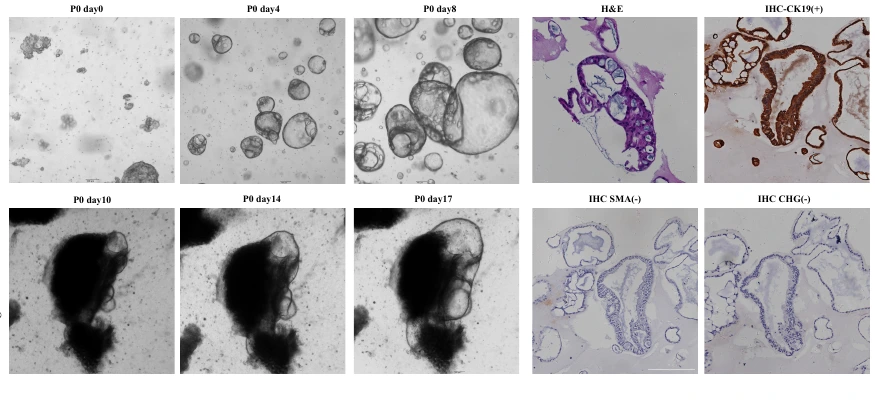
Culture and identity: serial P0 growth is shown with H&E; the representative panel is CK19-positive and SMA-negative.
Study data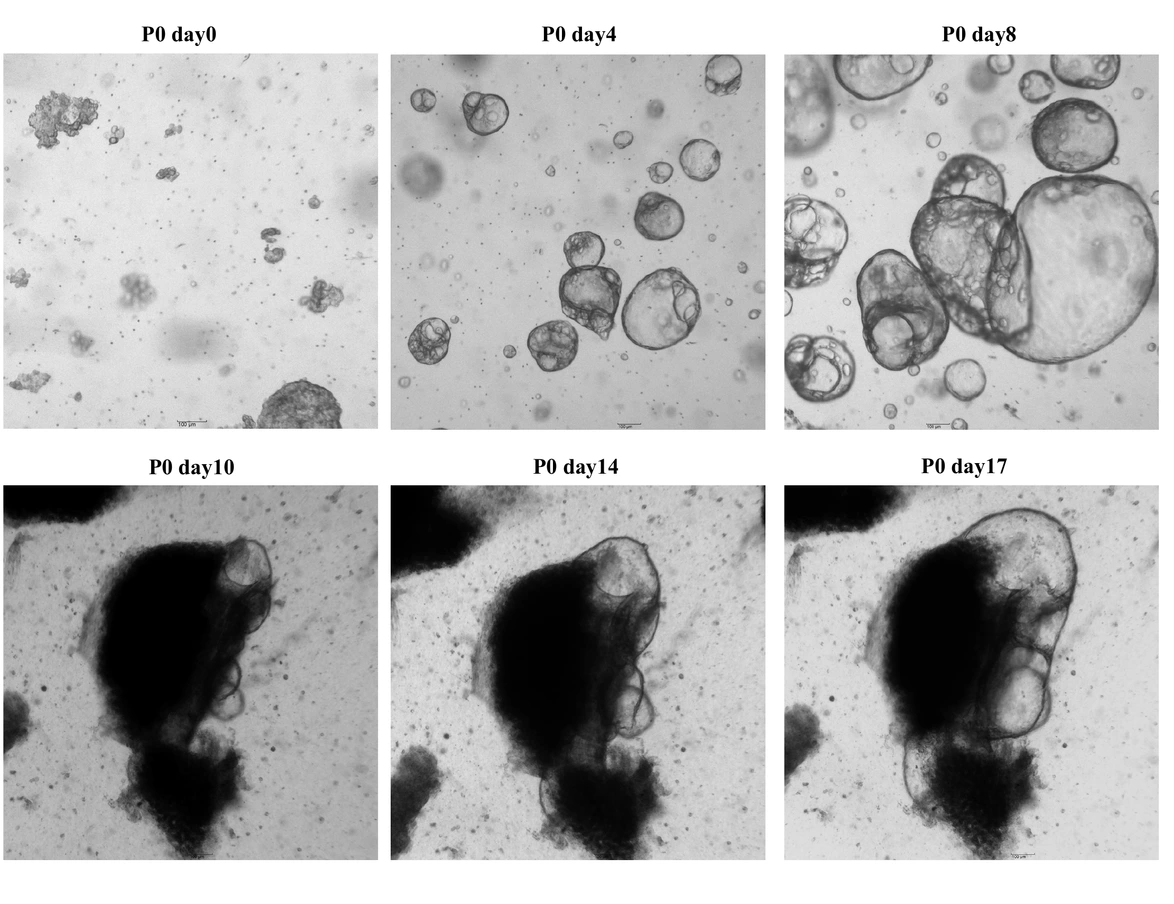 View image
Serial culture: bright-field views at P0 days 0, 4, 8, 10, 14 and 17 show morphological change during establishment and guide culture-state selection for subsequent studies.
Study data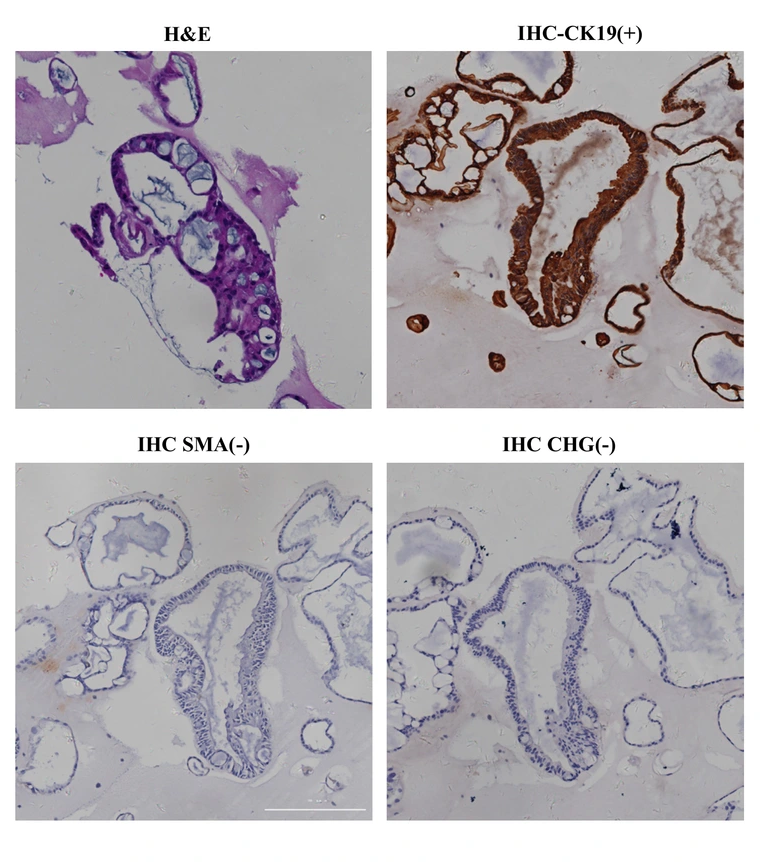 View image
Histology and identity: H&E shows tissue structure; the representative panel is CK19-positive and SMA-negative, supporting liver-epithelial, injury and adjacent-tissue comparison studies.
Study dataStudy planning
Candidate exposure and the priority organ-safety or functional endpoints shape the model conditions, dosing and readouts.
Modality, concentration range, exposure time and control conditions.
Priority organ-injury, efficacy or functional endpoints, together with the readouts needed to interpret them.
Required culture format, study batches, raw data, images and reporting needs.
Study design
Derived from adjacent non-tumor liver tissue, this model combines culture morphology, histology and epithelial markers for liver epithelial biology, drug exposure, tissue injury and tumor-adjacent comparisons.
Record tumor adjacency, sampling region and available pathology.
Use serial culture, H&E and morphology to assess growth and epithelial structure.
Serial culture and H&E show model structure; a CK19-positive, SMA-negative representative panel supports epithelial characterization.
Select endpoints for drug exposure, injury or tumor-adjacent comparison.
Research applications
Assays & QC
Serial morphology and H&E show tissue structure; the representative panel is CK19-positive and SMA-negative, supporting an epithelial characterization of the model.
Study & delivery
Choose model establishment, culture or dosing studies. Typical deliverables include imaging, histology and a study report.
This model supports studies of adjacent non-tumor liver tissue; epithelial identity, histology and required functional endpoints define the study scope.
Related solutions
PROJECT DISCUSSION
Candidate profile, expected exposure and priority organ risk determine dose conditions, controls and injury or functional endpoints for the adjacent non-tumor liver organoid.
Organoids from adjacent non-tumor liver tissue for epithelial-biology, drug-exposure and tumor-versus-adjacent-tissue studies.
Adjacent non-tumor liver tissue from surgical specimens
3D culture · Organoid 1.0 / 2.0 comparison
TRiCBIO adjacent non-tumor liver organoid culture and characterization
Model characterization
Culture morphology, histology and tissue-lineage markers establish the model profile and guide selection of subsequent efficacy, safety or functional endpoints.
View imageCulture and identity: serial P0 growth is shown with H&E; the representative panel is CK19-positive and SMA-negative.
Study dataView imageSerial culture: bright-field views at P0 days 0, 4, 8, 10, 14 and 17 show morphological change during establishment and guide culture-state selection for subsequent studies.
Study dataView imageHistology and identity: H&E shows tissue structure; the representative panel is CK19-positive and SMA-negative, supporting liver-epithelial, injury and adjacent-tissue comparison studies.
Study dataStudy planning
Candidate exposure and the priority organ-safety or functional endpoints shape the model conditions, dosing and readouts.
Modality, concentration range, exposure time and control conditions.
Priority organ-injury, efficacy or functional endpoints, together with the readouts needed to interpret them.
Required culture format, study batches, raw data, images and reporting needs.
Study design
Derived from adjacent non-tumor liver tissue, this model combines culture morphology, histology and epithelial markers for liver epithelial biology, drug exposure, tissue injury and tumor-adjacent comparisons.
Record tumor adjacency, sampling region and available pathology.
Use serial culture, H&E and morphology to assess growth and epithelial structure.
Serial culture and H&E show model structure; a CK19-positive, SMA-negative representative panel supports epithelial characterization.
Select endpoints for drug exposure, injury or tumor-adjacent comparison.
Research applications
Assays & QC
Serial morphology and H&E show tissue structure; the representative panel is CK19-positive and SMA-negative, supporting an epithelial characterization of the model.
Study & delivery
Choose model establishment, culture or dosing studies. Typical deliverables include imaging, histology and a study report.
This model supports studies of adjacent non-tumor liver tissue; epithelial identity, histology and required functional endpoints define the study scope.
Related solutions
PROJECT DISCUSSION
Candidate profile, expected exposure and priority organ risk determine dose conditions, controls and injury or functional endpoints for the adjacent non-tumor liver organoid.