
Peer-reviewed publicationTechnology & applications
ALI tumor–immune organoids | Technology & program applications
Explore how ALI tumor–immune organoids can support sample profiling, immunotherapy candidate evaluation and functional assay design—and how TRiCBIO can support your program.
How we can support your program
From patient samples to candidate comparison
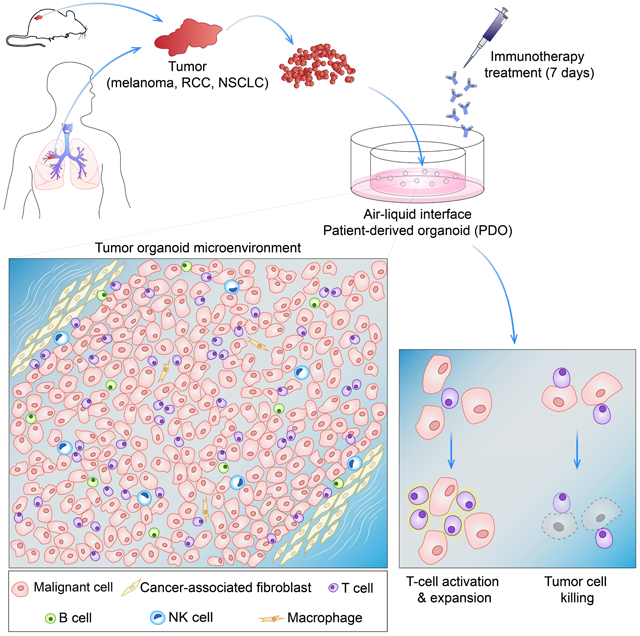
TRiCBIO combines ALI models, sample profiling and functional assays around your candidate and development goals to create an actionable tumor–immune study.
 View image
TRiCBIO team expertise · Cell 2018
Tumor–immune programs supported by ALI technology expertise
ALI systems enable tumor epithelium, tissue architecture and sample-derived immune cells to be studied in a three-dimensional context. TRiCBIO applies this expertise to model establishment, sample-baseline assessment, candidate treatment and functional assay design.
- Journal
- Cell · 2018
- DOI
- 10.1016/j.cell.2018.11.021
- PMID
- 30550791
- TRiCBIO scientific team
- Xingnan Li, PhD · paper co-first author
Study options
Select samples, models and functional assays around your candidate
Programs can combine model QC, immune-composition analysis, TCR profiling and checkpoint-related functional assays to compare candidates and plan the next development step.
 View image
FIG. 1 · PUBLISHED RESEARCH FIGURE
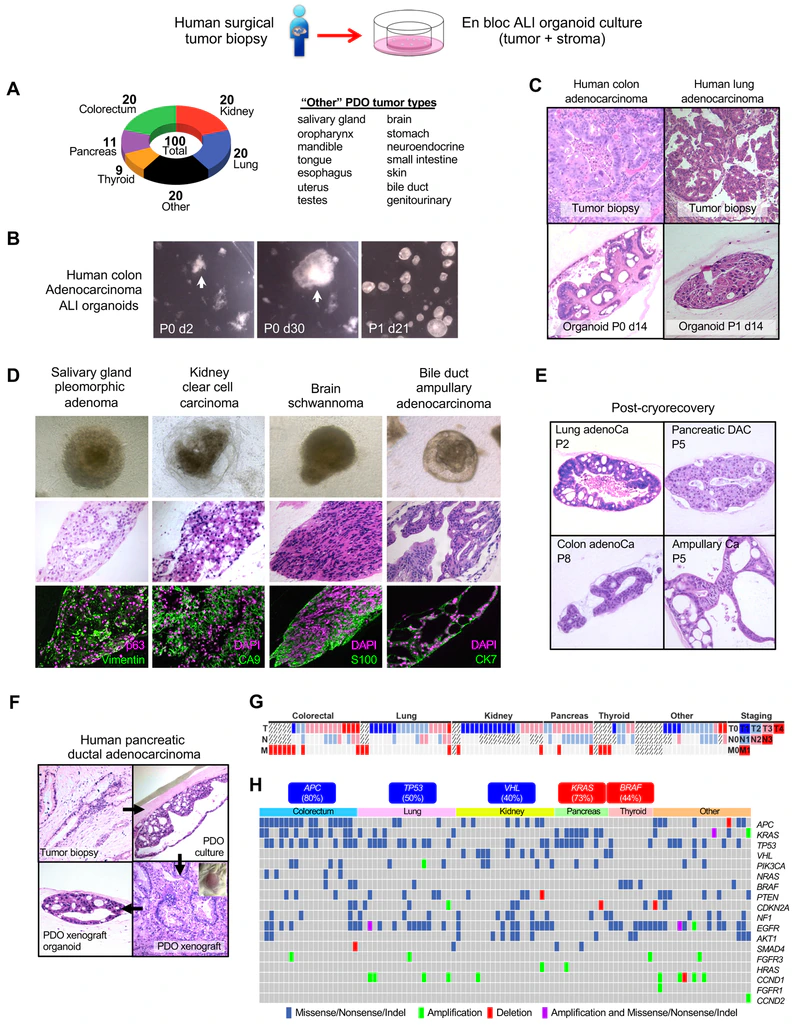
01Establish and characterize ALI PDOs across tumor types
Tissue morphology, key molecular features and passage stability show model quality and provide a starting point for downstream candidate studies.
 View image
FIG. 3 · PUBLISHED RESEARCH FIGURE
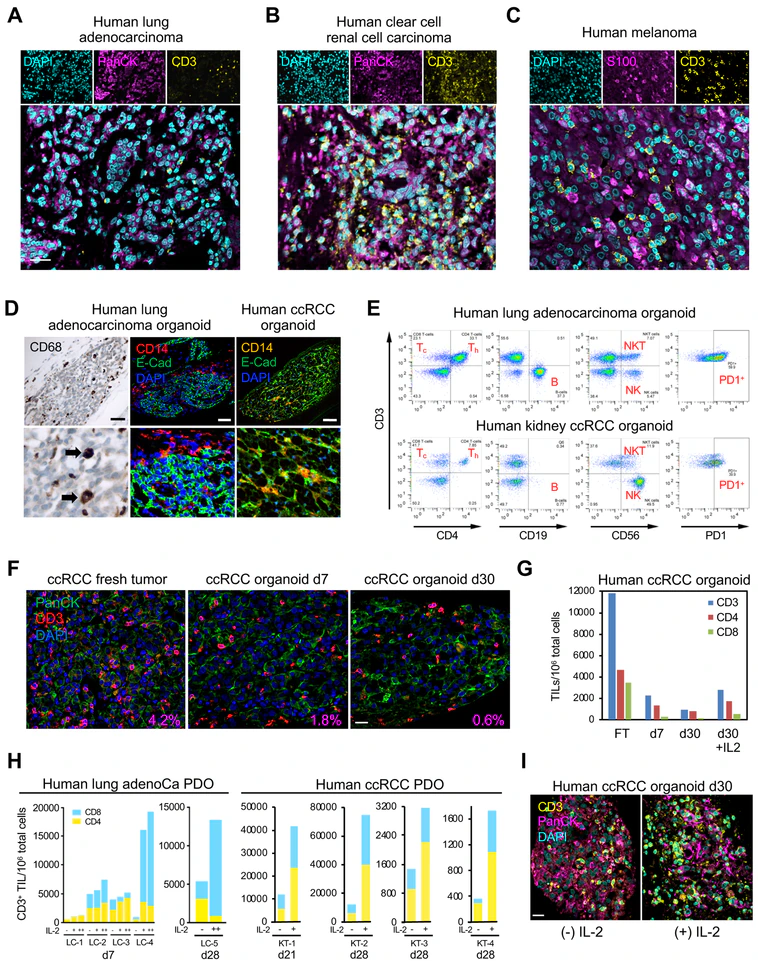
02Define immune composition and the study window
Immunofluorescence and flow reveal T, B, NK and macrophage populations and inform culture timing and assay endpoint design.
 View image
FIG. 5 · PUBLISHED RESEARCH FIGURE
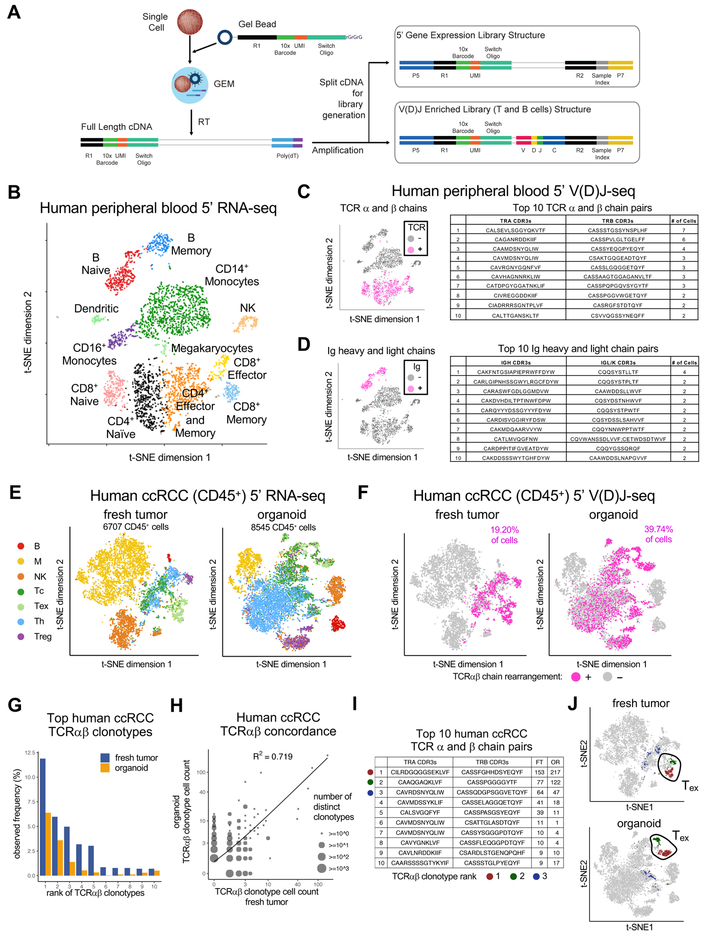
03Connect immune cells and TCR repertoires with mechanism studies
Single-cell transcriptome and V(D)J profiling compare immune cells and TCR clonotypes between source tumor and matched PDO, adding multidimensional readouts for sample-level immune studies.
 View image
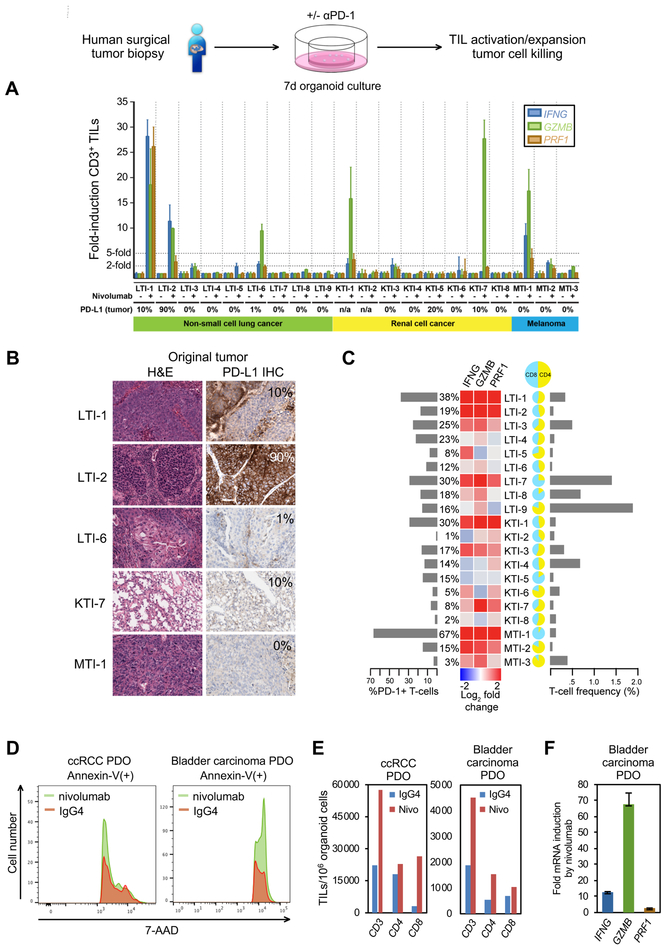
FIG. 7 · PUBLISHED RESEARCH FIGURE
04Configure functional endpoints for immunotherapy candidates
Combine checkpoint treatment with TIL activation, effector molecules and tumor-cell death to compare functional responses across candidate strategies.
Study tumor and immune response in one model
Within an appropriate experimental window, studies can assess sample-derived immune cells, compare TCR repertoires and examine checkpoint-related functional responses.
Configure samples, controls and endpoints around the candidate
Use the sample’s cellular composition and available culture window to define candidate treatment, controls, replication, independent samples and decision-relevant functional endpoints.
Turn the ALI method into an executable study
TRiCBIO configures sample baselines, immune readouts and study windows around the R&D question, then delivers the agreed data, analysis and recommendations for next steps.
ALI PROGRAM PLANNING
Plan your ALI tumor–immune program
Share the candidate, tumor type, available samples and endpoints you want to compare. Our scientists will use them to discuss the model, controls and assay plan.