
EvidenceNavigation menu
R&D ServicesModels & ProductsApplicationsTechnologyEvidence & ResourcesHow We WorkAbout TRiCBIOBiobankProject inquiry中文
Study resultsModel and tissue characterization

Liver cancer PDO 2.0: morphology and tissue identity

Culture morphology, source-tissue/PDO H&E and hepatocyte- and endothelial-related IHC guide efficacy and mechanism endpoints in liver-cancer studies.

01Study objective02Model & design03Assays & findings04Decision & next step
Model & sampleTissue-derived liver-tumor PDOs
ObjectiveEstablish tissue context, model identity and downstream study direction for the liver-tumor samples
Study setupModel establishment and tissue characterization; drug or immune conditions configured for follow-on studies
AssaysBright-field, H&E, hepatic/epithelial and endothelial markers; efficacy or immune endpoints configured for follow-on work
Study evidencePDO culture imaging, source-tissue/PDO histology, and hepatic- and endothelial-related IHC
DeliverablesDeliverables are defined by the study scope and may include images, assay results, an analysis summary, methods and a study report

STUDY EVIDENCE

Culture morphology and tissue identity in liver-cancer PDO 2.0

Culture morphology, histology and immunohistochemistry establish model context and guide endpoint selection for follow-on efficacy and mechanism studies.

01PDO 2.0 model context
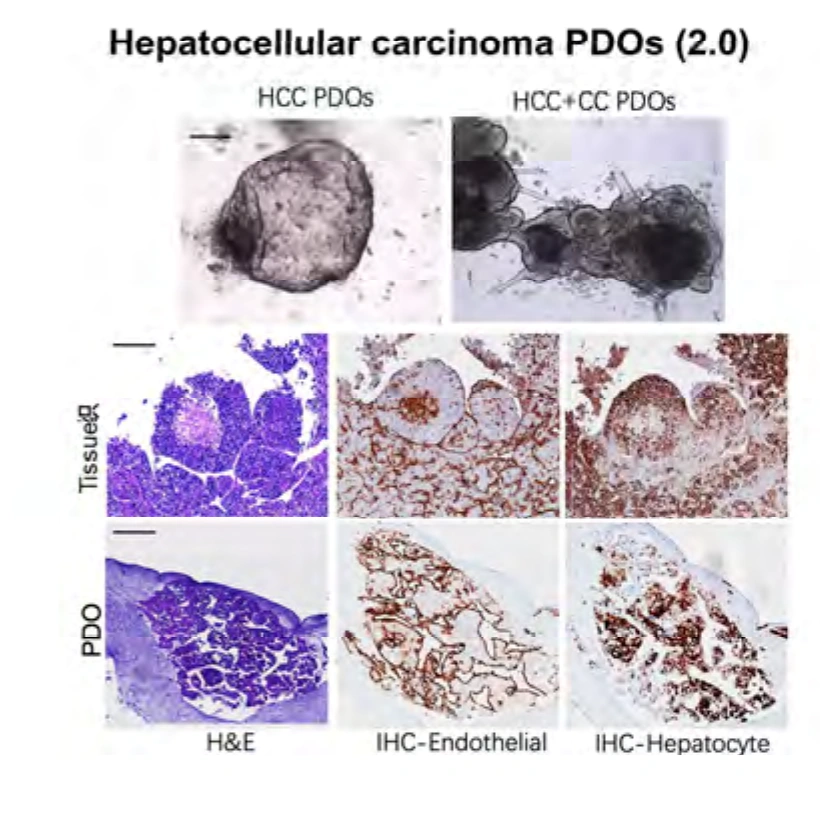
Liver-cancer PDO 2.0 culture, histology and identity profiling

Liver-cancer PDO 2.0 culture, histology and identity profiling

PDO culture morphology is evaluated with source-tissue/PDO H&E and endothelial- and hepatocyte-related IHC to connect culture, tissue structure and lineage context.

Guides model and endpoint selection for efficacy and mechanism studies
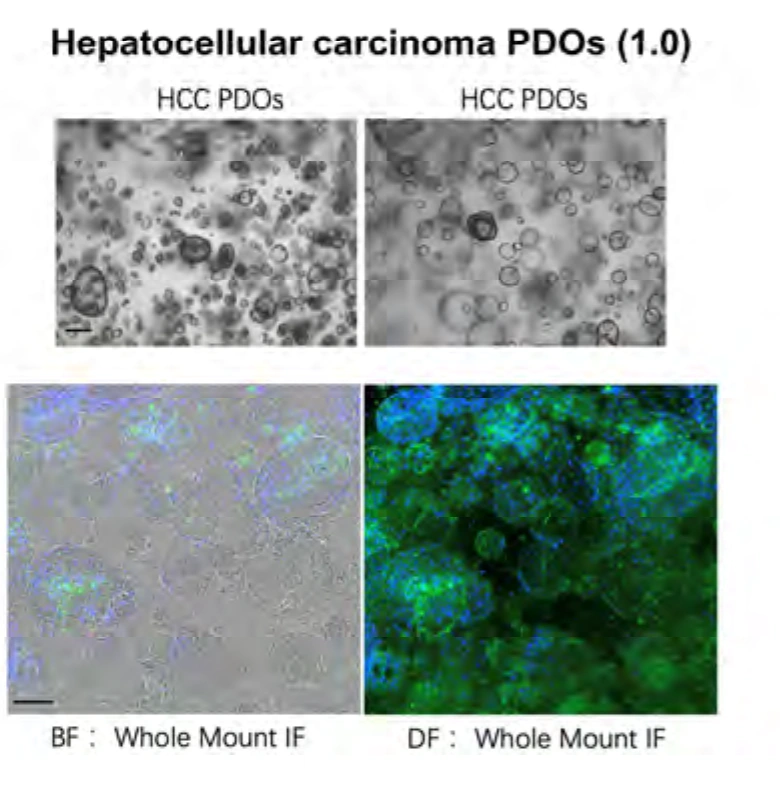
02Conventional PDO reference
Conventional HCC PDO culture and whole-mount immunofluorescence

Conventional HCC PDO culture and whole-mount immunofluorescence

Bright-field and whole-mount immunofluorescence in a conventional HCC PDO document morphology and cell state, adding a complementary conventional-PDO view to liver-cancer study design.

Adds conventional-PDO morphology and cell-state context

INTERPRETATION

Select the study direction around the liver-tumor context

How the results are used

Defines efficacy or mechanism study directions for the profiled liver-tumor samples.

Study application

Interpret results in the context of sample pathology, tissue source, culture morphology and markers, then use them to design efficacy and mechanism studies.

Follow-on study

Build pathology- and target-informed dose, time-course and additional-sample studies.

Related models and services

Choose the right models and services for the next study

PROJECT DISCUSSION

Discuss a study built around your program

Tell us which model features and readouts matter most. Our scientists will recommend the model, QC plan and study endpoints.